


Every property has a story, but not every story is visible from the street. A weekend open house in the Canberra region often looks perfect under soft afternoon light, fresh paint, polished floors, and a garden trimmed just enough to charm a first impression. Yet beneath that surface, walls hold moisture stains, roofs hide cracked tiles, and foundations sometimes shift in ways no untrained eye would catch. This is where building inspections step in, quietly rewriting the ending before a family signs away their savings on a home that isn’t what it seems.
The House That Looked Too Good to Be True
In one such tale, a young family fell in love with a charming brick home on the edge of Canberra. The listing photos were flawless, the price felt fair, and the excitement of a fresh start clouded any hesitation. Before making an offer, they arranged building inspections Canberra buyers often rely on to separate emotion from evidence. The inspector’s torch found what the open home lighting had hidden: rising damp in the subfloor, a slow leak behind the bathroom tiles, and termite trails along the timber frame. What began as a dream almost became a financial nightmare, until due diligence intervened.
Why Location Shapes the Inspection Story
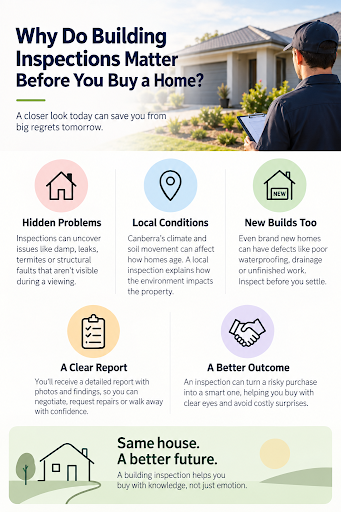
Canberra’s climate swings between frosty winters and dry summers, and this constant shift stresses brick, timber, and concrete differently than in coastal cities. A pre purchase inspection in this region isn’t just a formality; it’s a translation of how the local environment interacts with a specific structure. Just across the border, building inspections Queanbeyan residents often reveal similar patterns, since the two regions share weather extremes and soil movement that can crack slabs or warp door frames over time. A thorough property inspection report can explain why a home behaves the way it does.
Contact Canberra Plus Building Inspections today for a detailed, easy-to-understand property report.
New Builds Are Not Immune to Trouble
A common myth is that only old houses need scrutiny, but new constructions carry their own quiet risks. Builders under pressure to meet deadlines can overlook waterproofing details, drainage falls, or wiring standards. A new build inspection Canberra families increasingly request during handover stages often uncovers unfinished sealing, misaligned frames, or plumbing that wasn’t pressure tested properly.
Catching these issues before settlement means the builder, not the buyer, carries the cost of correction. This is where building inspections prove their value a second time, not just for old homes with history, but for brand new ones still writing theirs.
What Happens During an Inspection
The process itself unfolds like a careful investigation. A licensed building inspector Canberra walks through every accessible space, from roof cavities to subfloors, checking structural integrity, moisture levels, and safety hazards. Photographs, thermal readings, and moisture meters build a picture that plain sight cannot. The result is a clear, written report translating technical findings into decisions a buyer can actually use, whether that means renegotiating price, requesting repairs, or walking away entirely.
The Ending Every Buyer Deserves
For the family in this story, the inspection report became a turning point. Armed with evidence, they renegotiated the price to cover termite treatment and damp repair, ultimately buying the home with clear eyes and a lighter financial burden. Their story mirrors thousands across the region, where a single inspection rewrites an ending from regret to relief.
Request a same-week new build inspection with Canberra Plus Building Inspections for complete peace of mind.
Take the Next Step with Canberra Plus Building Inspections
Book a comprehensive inspection with Canberra Plus Building Inspections before your next property decision.
- What do building inspections actually check?
They assess structural integrity, moisture, pests, safety hazards, and overall condition of a property.
- How long does a building inspection take?
Typically between one and three hours, depending on property size and accessibility.
- Is a building inspection required for new builds?
It isn’t legally mandatory but is strongly recommended before handover.
- What is the difference between a pest and building inspection?
A building inspection checks structural issues, while a pest inspection focuses on termites and infestations.
- Can inspection reports help with price negotiation?
Yes, documented defects often become leverage during price discussions.
- How soon should an inspection happen before settlement?
Ideally within the cooling off or due diligence period, often within seven to ten days.
- Are Canberra and Queanbeyan properties inspected differently?
The process is similar, though local soil and climate factors are considered.
- Do inspectors check roof cavities and subfloors?
Yes, both areas are standard inspection zones when accessible.
- What happens if major defects are found?
Buyers can renegotiate, request repairs, or withdraw from the purchase.
- How much does a professional inspection cost?
Costs vary by property size, typically a modest investment compared to potential repair expenses.