


Owning a home in Canberra comes with many joys, but it also comes with responsibilities and protecting your property from timber pests is one of the most important. Termites, borers, and other wood-destroying insects can cause thousands of dollars in structural damage before any visible signs appear. That’s why regular timber pest inspection services Canberra homeowners rely on are essential for peace of mind and long-term property protection.
Why Timber Pest Inspections Matter
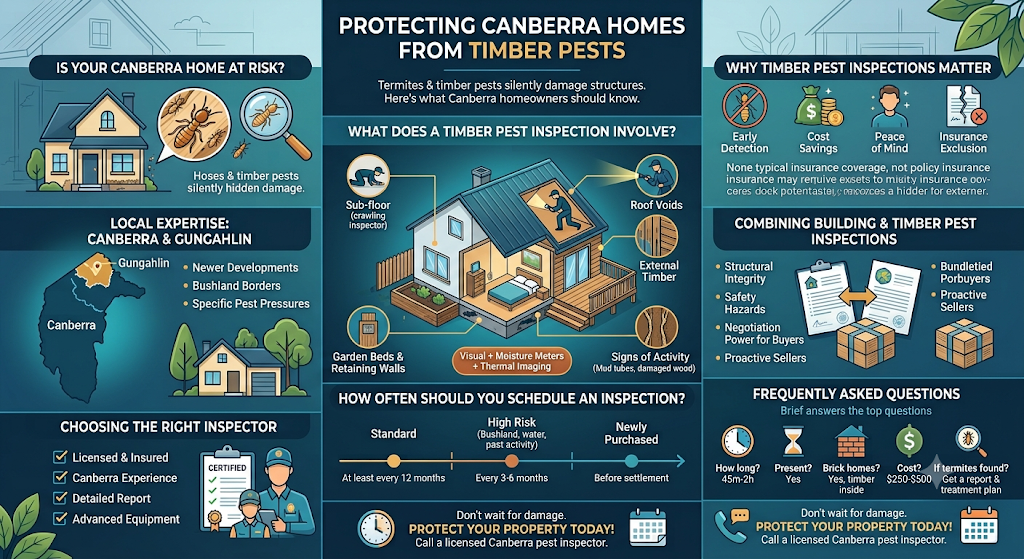
Timber pests, particularly subterranean termites, thrive in Canberra’s climate and can attack homes without any obvious warning signs. By the time you notice sagging floors, hollow-sounding timber, or discarded wings near windowsills, the damage may already be extensive. A professional inspection identifies early signs of infestation, moisture problems, and conditions that attract pests, allowing you to act before costly repairs become necessary.
Standard home insurance policies typically do not cover termite damage, which makes prevention and early detection even more critical. Investing in regular inspections is far more affordable than rectifying structural damage after an infestation has taken hold.
What Does a Timber Pest Inspection Involve?
A thorough inspection covers all accessible areas of a property, including:
- Sub-floor spaces and foundations
- Roof voids and ceiling cavities
- External timber cladding, decks, and fences
- Garden beds, retaining walls, and timber in contact with soil
- Moisture levels using specialised meters
- Signs of past or current termite activity, including mud tubes and damaged wood
Licensed inspectors use a combination of visual assessment, moisture meters, and sometimes thermal imaging or termite detection radar to identify problem areas that aren’t visible to the untrained eye. A detailed report is then provided, outlining any risks found and recommended treatment or preventative measures.
Local Expertise: Timber Pest Inspections Gungahlin and Surrounds
Different suburbs across Canberra present different pest risk profiles depending on soil type, vegetation, and building age. For residents seeking timber pest inspections Gungahlin can benefit from inspectors familiar with the area’s newer developments, which often feature timber-frame construction bordering bushland reserves, an environment where termites are especially active.
Choosing a local inspection provider means you get technicians who understand Gungahlin’s specific pest pressures, seasonal termite swarming patterns, and common construction styles in the region. This local knowledge often makes the difference between a generic inspection and one that truly protects your investment.
Combining Timber Pest and Building Inspections
While timber pest inspections focus specifically on wood-destroying organisms, many homeowners choose to pair them with comprehensive building inspections for a complete picture of their property’s condition. Building inspections assess structural integrity, safety hazards, plumbing, electrical systems, and overall compliance with building standards.
Combining both inspections is particularly valuable when buying or selling a property. Pre-purchase inspections give buyers confidence and negotiating power, while pre-sale inspections allow sellers to address issues proactively and avoid surprises during the settlement process. Many licensed providers offer bundled packages, saving time and money compared to booking separate appointments.
How Often Should You Schedule an Inspection?
Industry standards, including those set out in the Australian Standard AS 3660, recommend timber pest inspections at least once every 12 months, with more frequent inspections every three to six months recommended for high-risk properties near bushland, water sources, or with a history of termite activity. Newly purchased homes should always undergo a timber pest inspection in Gungahlin before settlement, regardless of the property’s age or apparent condition.
Choosing the Right Inspection Provider
When selecting a provider, look for fully licensed and insured inspectors with experience across Canberra’s diverse suburbs. Ask about the equipment used, the format of the report provided, and whether follow-up advice or treatment recommendations are included. A reputable company will happily answer questions and explain their process before you commit.
Protect Your Home Today
Don’t wait for visible damage to take action. Whether you need routine timber pest inspection services Canberra and Gungahlin, scheduling a professional assessment now can save you significant stress and expense down the track. Contact Canberra Plus Building Inspections, a licensed local inspector, today to book your inspection and safeguard your property for years to come.
- 1. How long does a timber pest inspection take?
Most residential inspections take between 45 minutes and 2 hours, depending on property size and accessibility.
- 2. Can I be present during the inspection?
Yes, most inspectors encourage homeowners to be present to ask questions and understand any issues found firsthand.
- 3. Do I need a timber pest inspection if my home is brick?
Yes. Brick homes still contain timber framing, flooring, and roof structures that are vulnerable to termite attack.
- 4. How much does a timber pest inspection cost in Canberra?
Costs vary based on property size and provider, but typically range from $250 to $500 for a standard residential inspection.
- 5. What happens if termites are found?
The inspector will provide a detailed report with treatment recommendations, and you can arrange pest control services accordingly.
- 6. Is a timber pest inspection the same as a building inspection?
No, they assess different things, though many providers offer combined packages for convenience.
- 7. How soon should I get an inspection after buying a home?
Ideally before settlement, or within the first few weeks of moving in if a pre-purchase inspection wasn’t conducted.
- 8. Do new homes need timber pest inspections?
Yes, particularly in suburbs bordering bushland where termite activity is common regardless of building age.
- 9. Can I do a DIY termite inspection instead?
While homeowners can watch for warning signs, professional equipment and training are needed to detect concealed infestations accurately.
- 10. How often should Gungahlin properties be inspected?
Given the area’s proximity to bushland, annual inspections are recommended, with high-risk properties benefiting from six-monthly checks.